How It Was Made
A short film, a companion deck, a life map, and the story of how a Civil War voice came home after a century and a half of waiting.
UNSILENCED: The AI Time Machine · 4 min 44 sec
Generated with Google's NotebookLM using the book's manuscript and source materials. The NotebookLM watermark is preserved as an AI-content disclosure, in keeping with the book's own methodology.
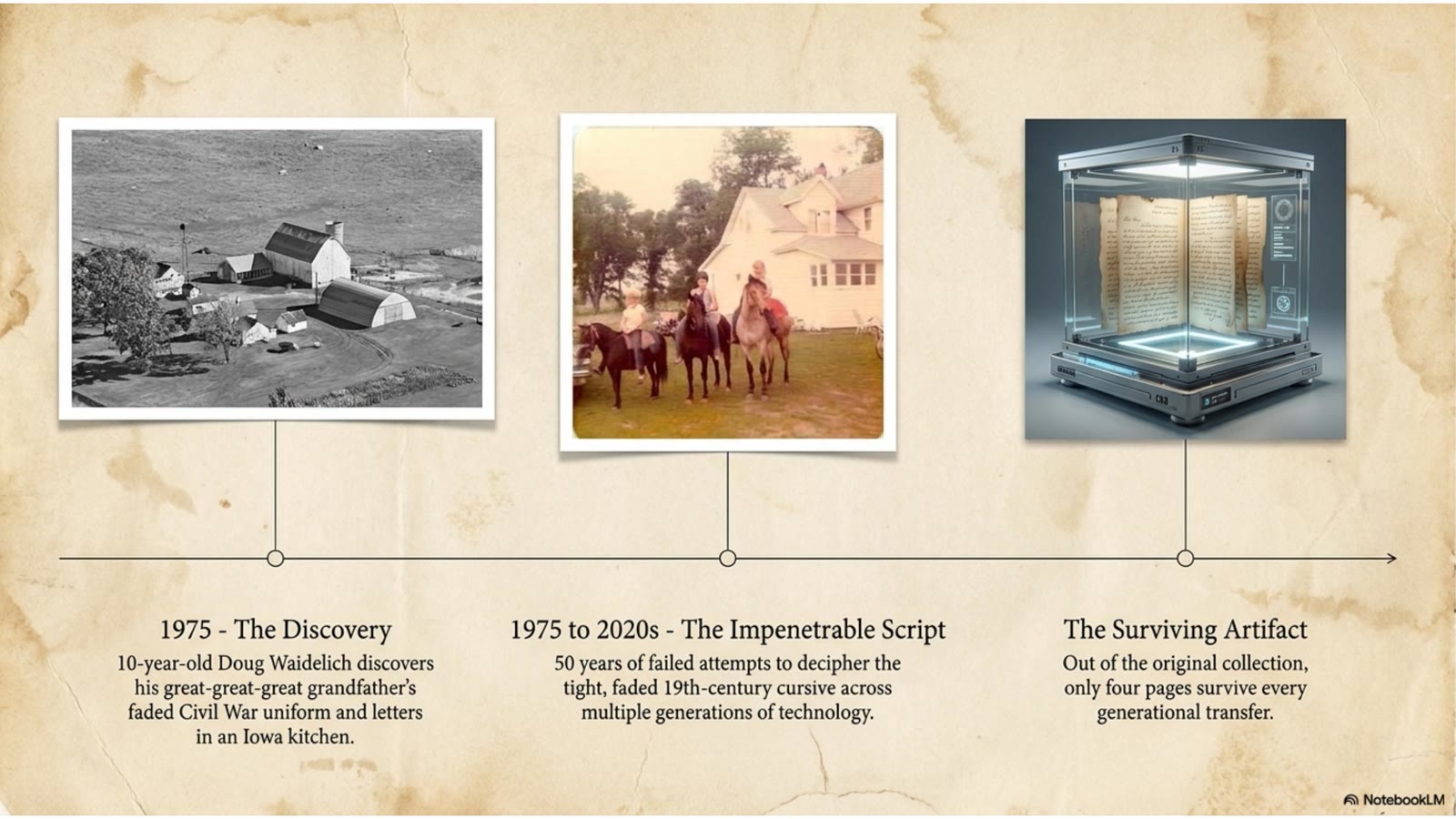
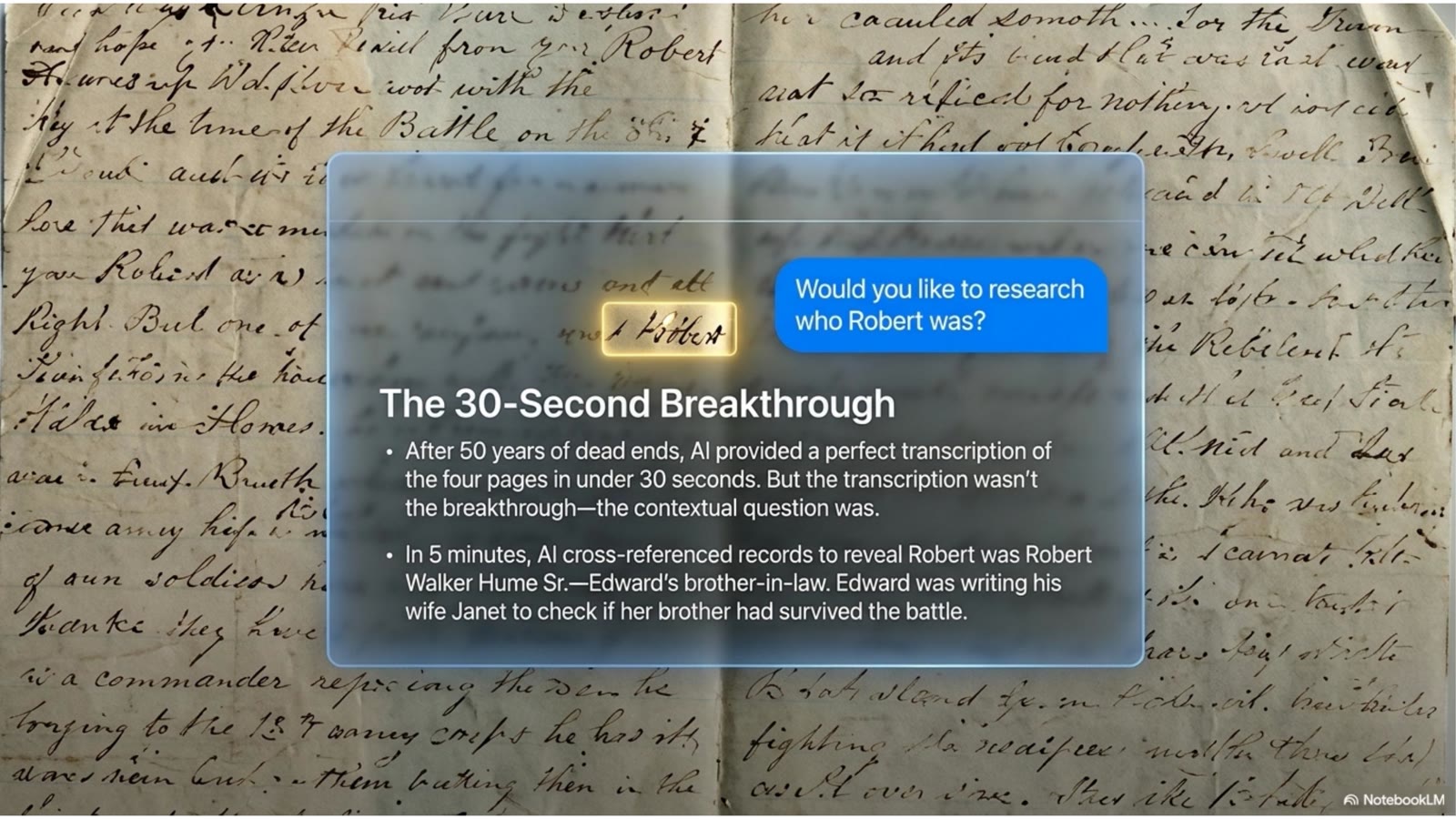
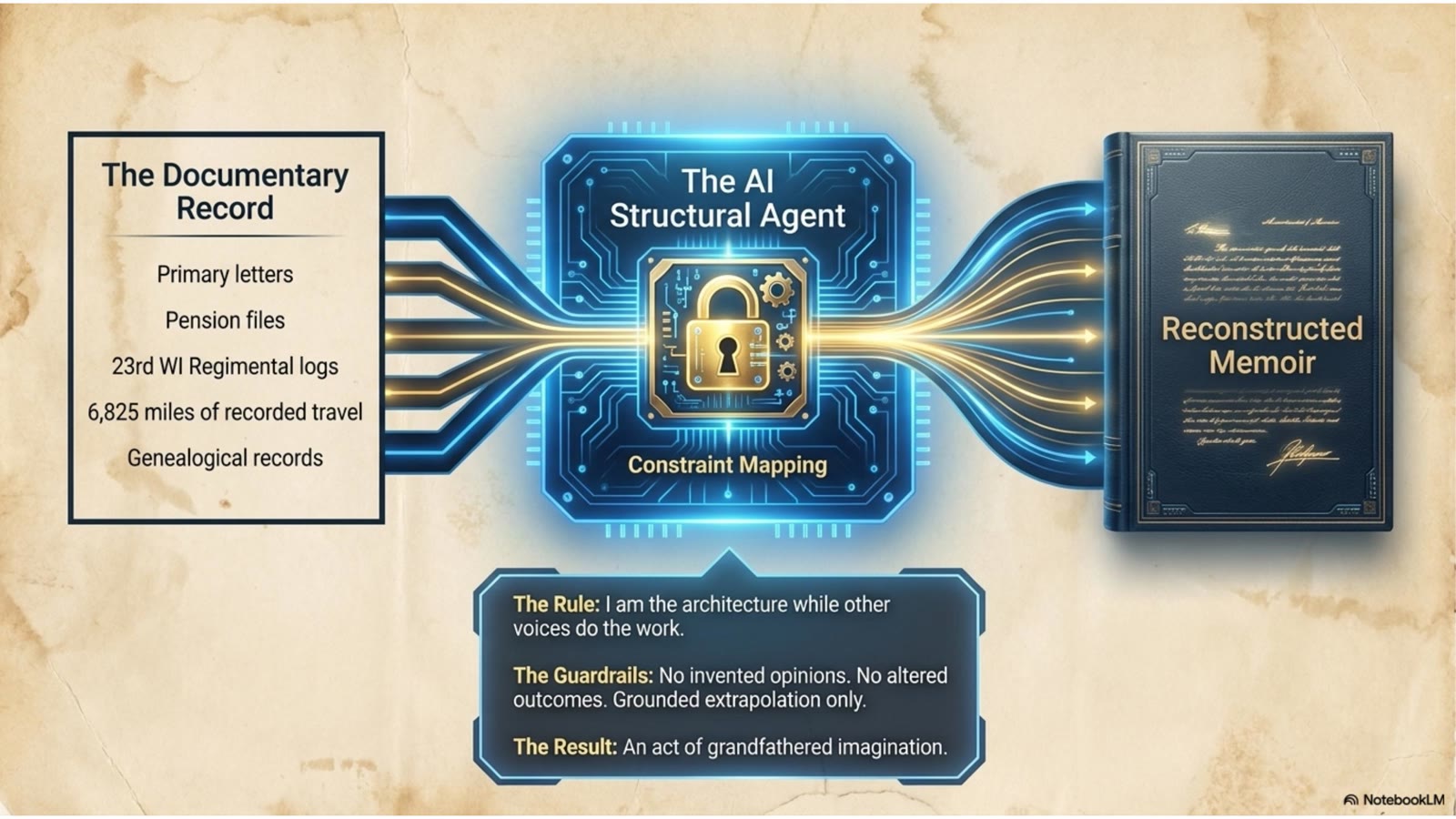
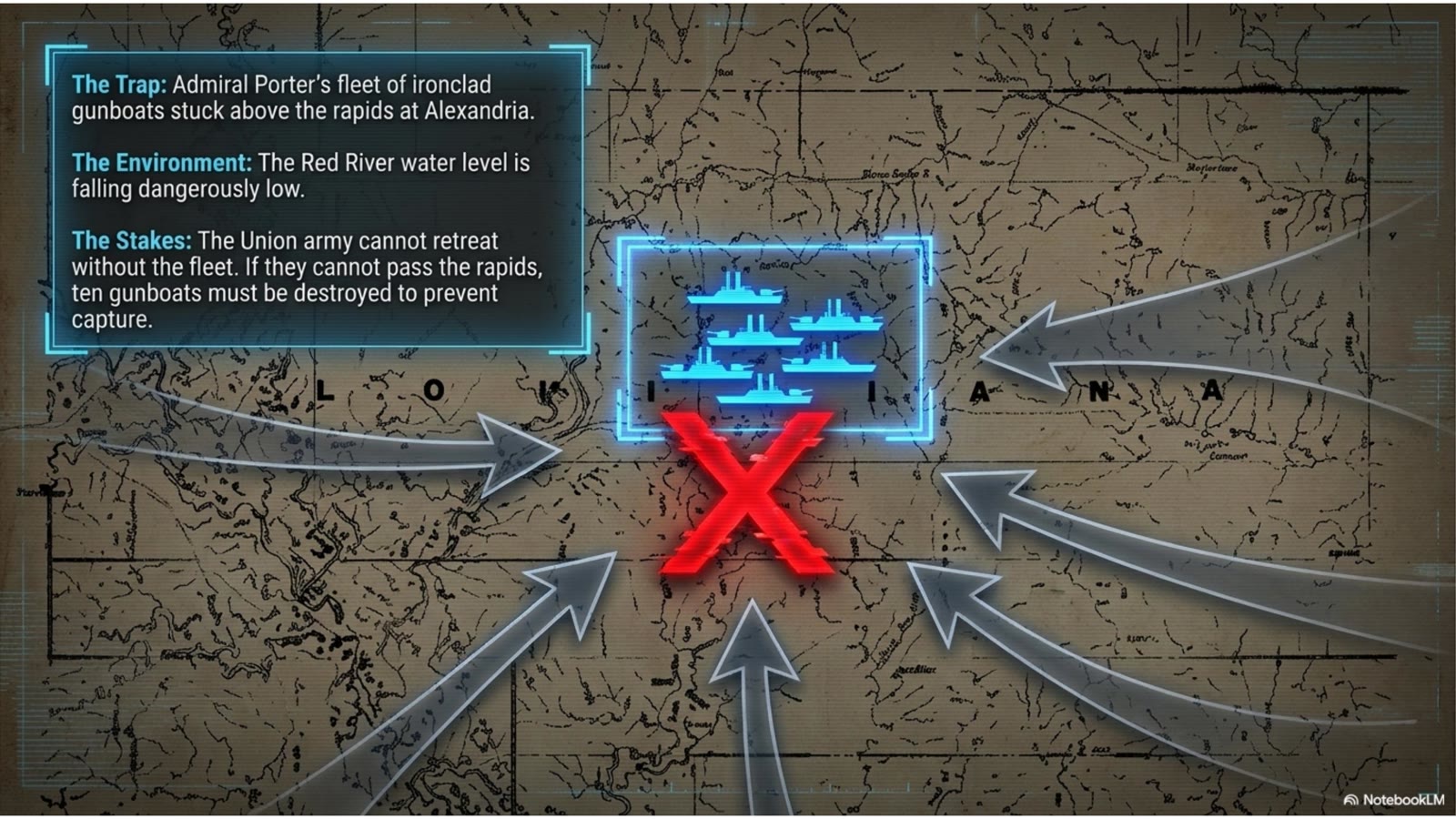
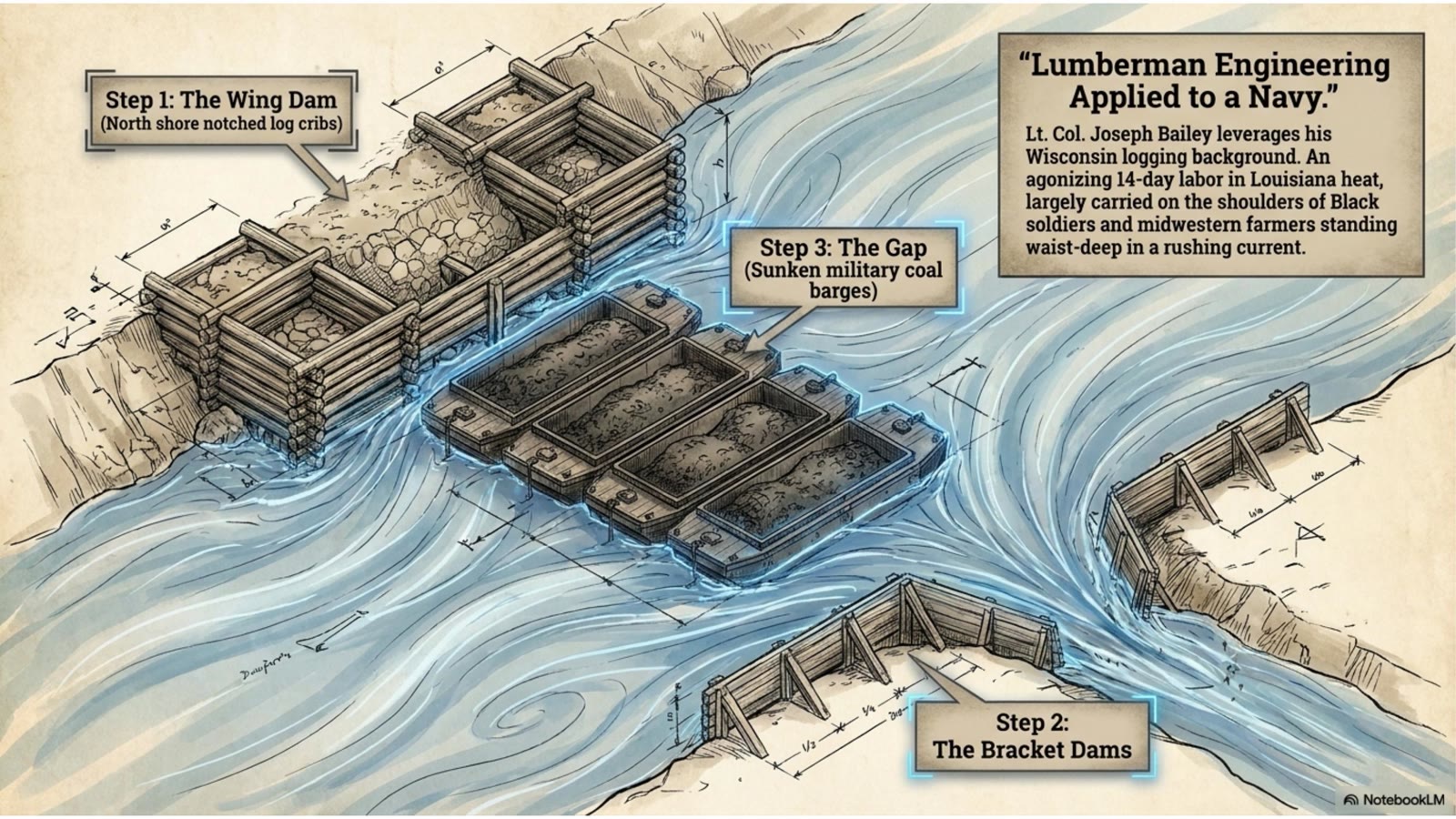
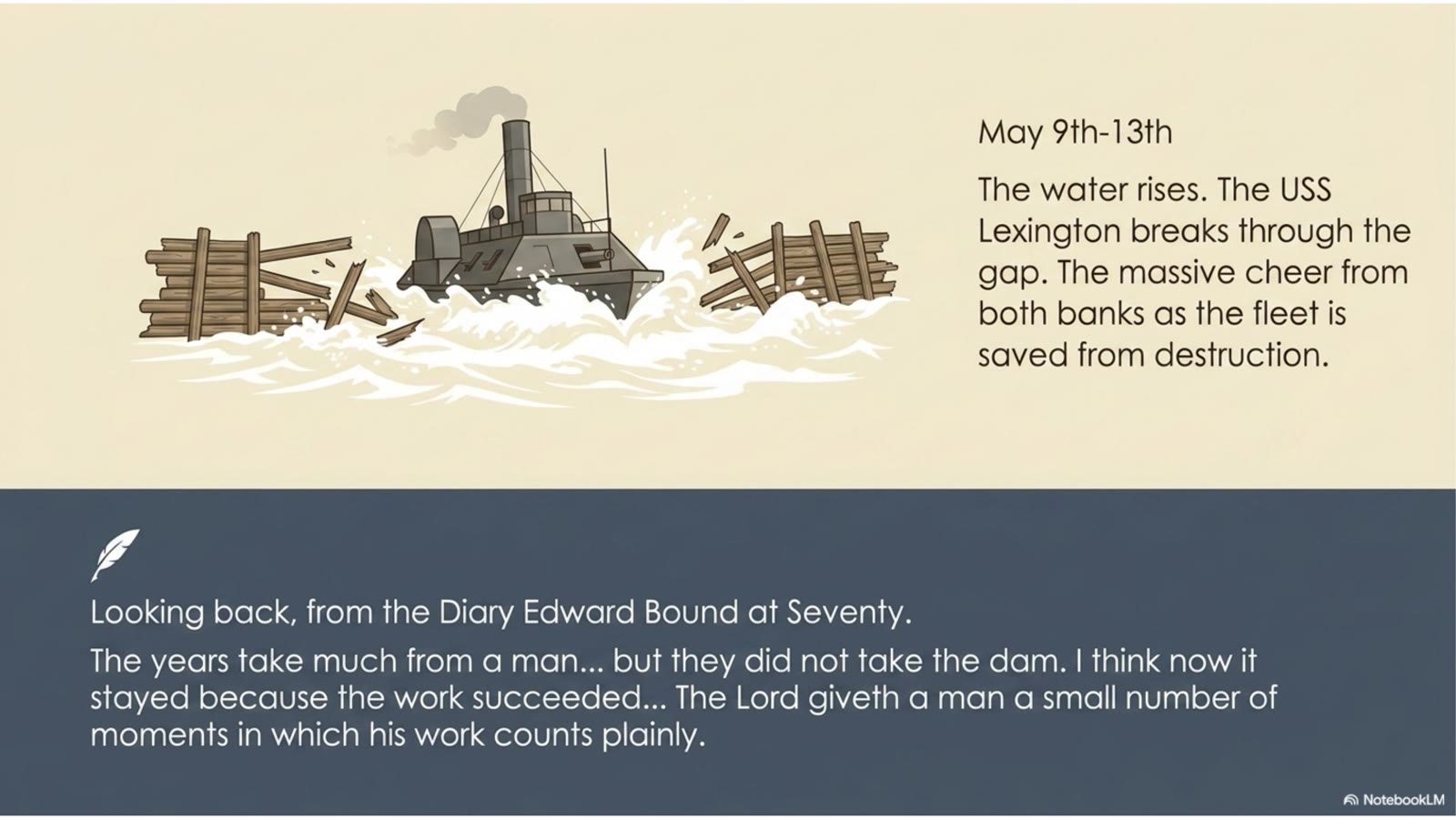
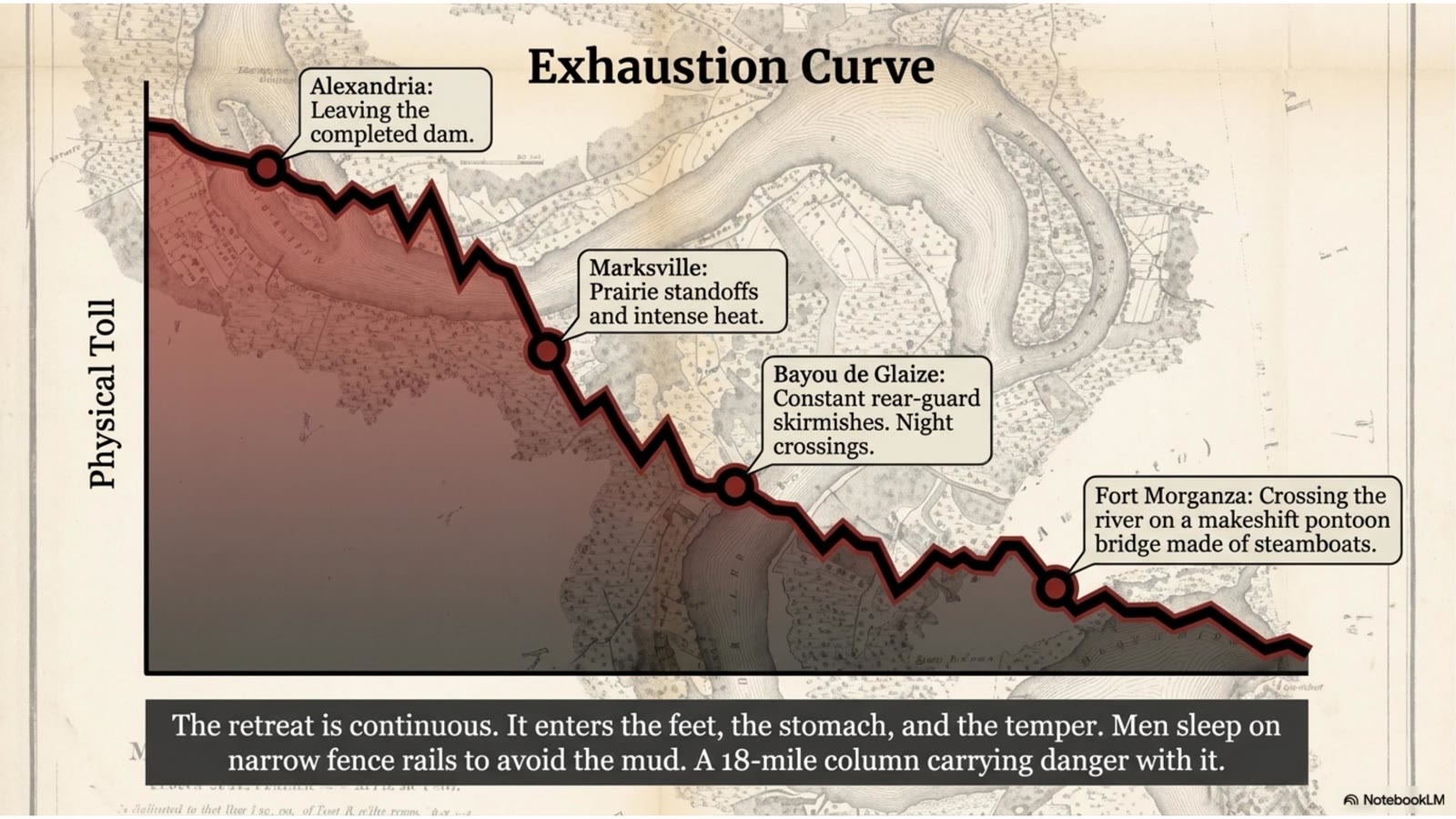
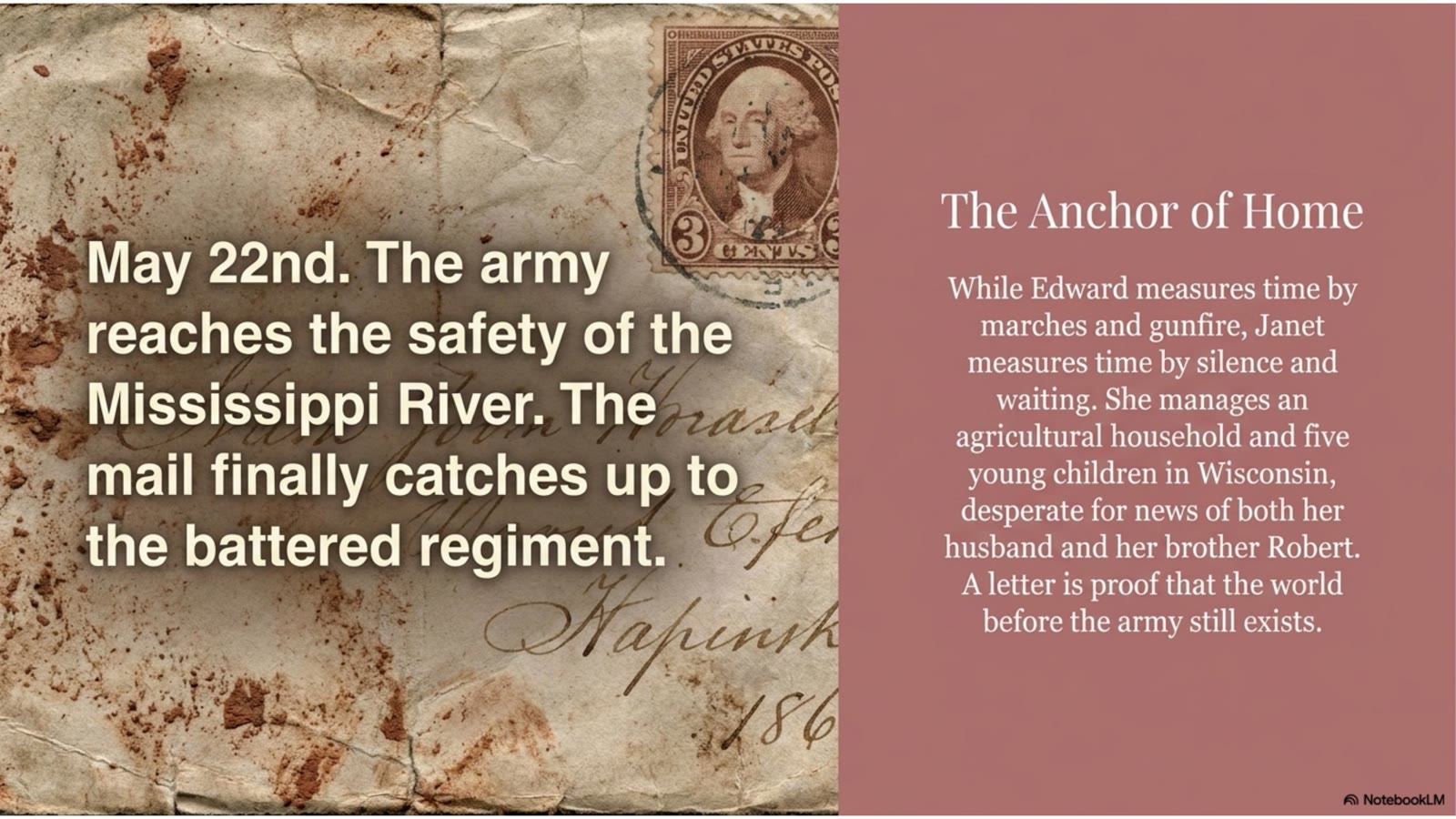

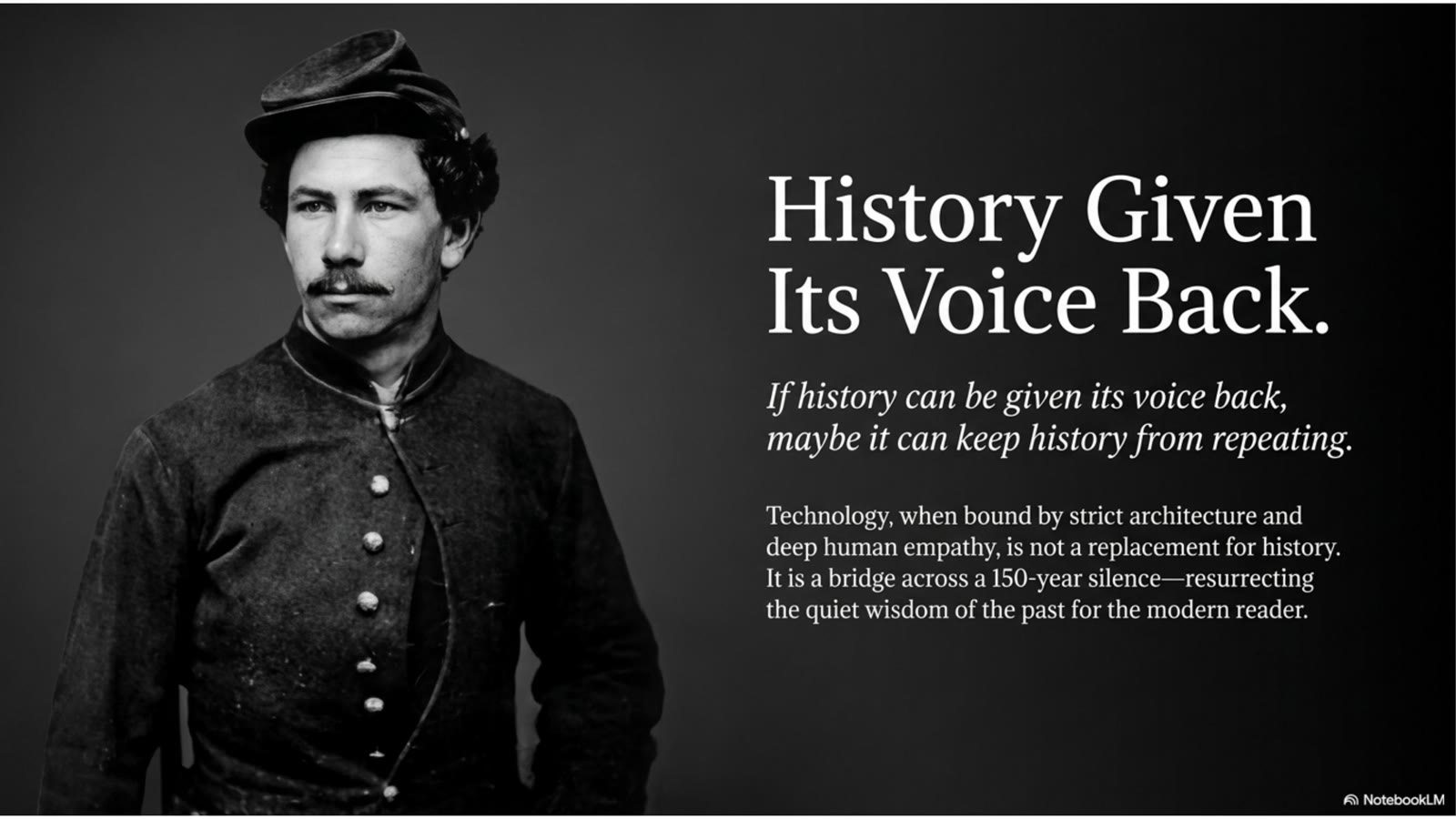
Unsilencing History · 15 slides
Use the arrows or the left/right keyboard keys to navigate.
Six voices
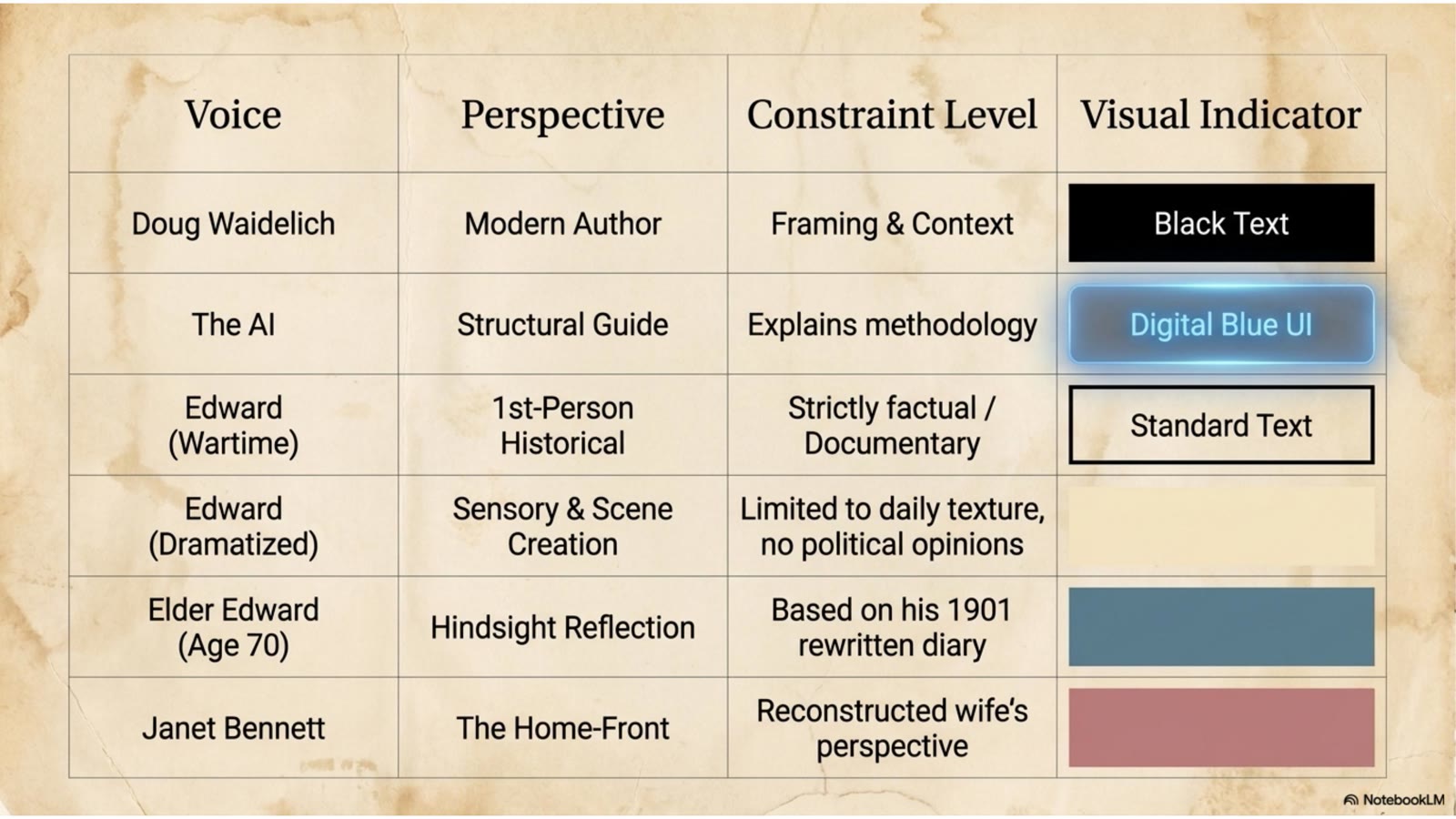
UNSILENCED is narrated by six voices, each disclosed in Chapter 2 and again in the audiobook's opening credits. The author, Doug Waidelich, reads in his own restored voice at the moments of first-person testimony. Edward Bennett, the great-great-great-grandfather at the center of the book, is voiced two ways — as a young soldier during the war years, and as the man he became at seventy, sitting at a Charles City desk with a diary he had decided to rewrite in a clean hand. Janet Hume Bennett, his wife, speaks from home. Doug's chief-of-staff agent, referred to in the book as Gram, reads the framing chapters.
Two AI agent frameworks
The book was made with a small crew of artificial intelligence agents running on two domestic Mac minis in the author's home office. The first machine ran OpenClaw, an open-source agent runtime. The second ran Hermes, from Nous Research. The two frameworks were kept separate on purpose, so the narrative writer and the editor sat on different platforms and could serve as an editorial check on each other.
The agents worked from primary sources: Edward Bennett's letters (assembled from more than one branch of the family), the diary he rewrote at seventy, regimental records for the Twenty-Third Wisconsin Volunteer Infantry, pension files, an obituary, and the broader documented history of the Red River Campaign and the Mobile Campaign of 1865. Where the record was silent, the book stayed silent. Where the record was thin, the book said so.
The point
UNSILENCED is not a novel. It is one man's attempt to hear an ancestor across six generations of silence, using the tools that finally became available in his lifetime to read what a ten-year-old boy in an Iowa farmhouse had once tried and failed to read. The book is about that reading. The audiobook is about hearing it aloud. This video, four minutes and forty-four seconds long, is about what it meant to try.
Ninety years, four countries of memory, and one long march that circled back to Iowa. Click any branch to expand or collapse it.
-
▼Origins and Discovery
- Author Doug Waidelich
- 1975 attic discovery
- Original letters and Civil War uniform
- Anthropic Claude AI reconstruction
-
▼Early Life and Immigration
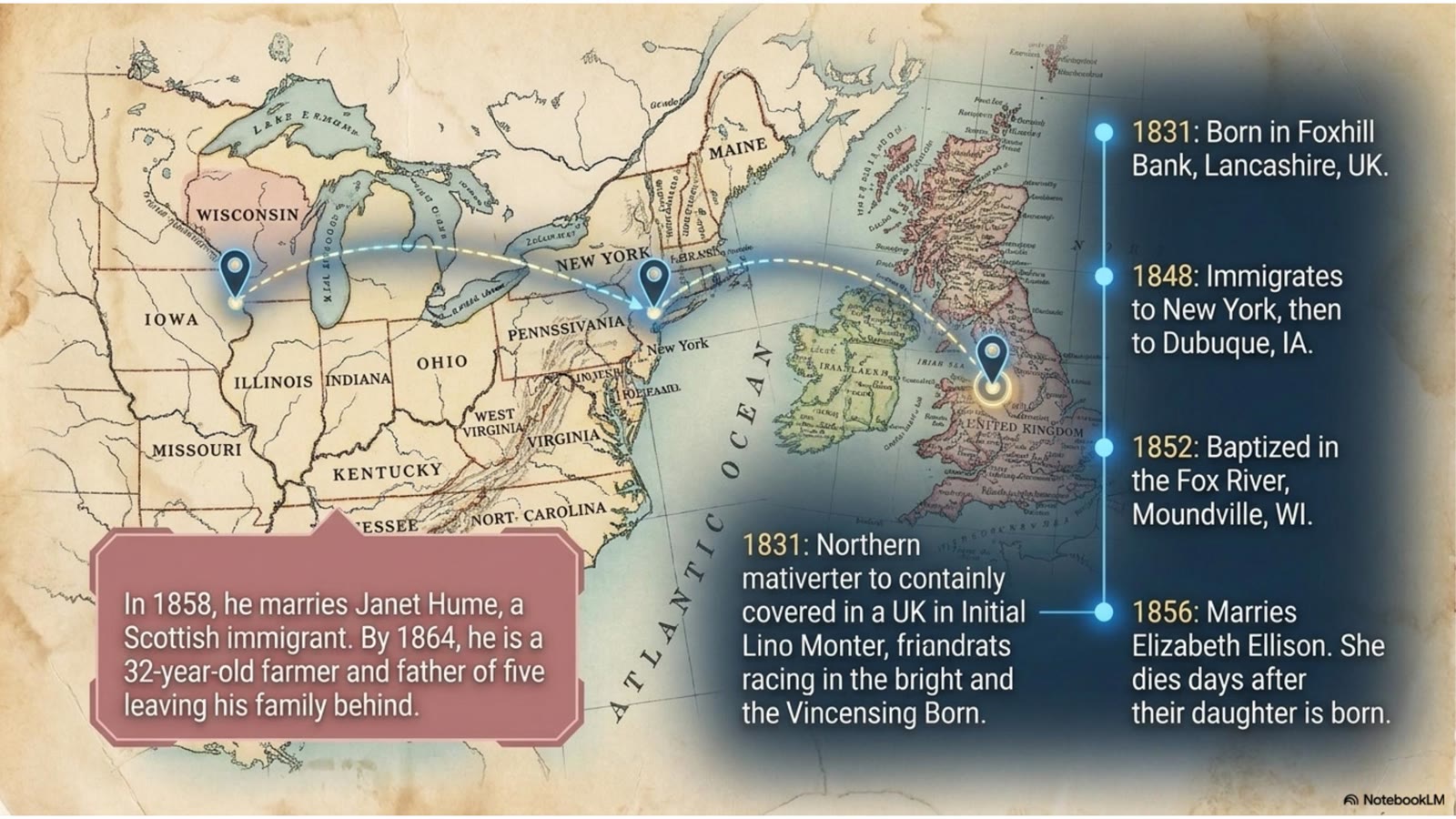
- Born 1831, Lancashire, England
- Immigrated to America 1848
- Dubuque, Iowa general store
- Moundville, Wisconsin farming
- Baptist baptism 1852
-
▼Family and Personal Loss
-
▼Elizabeth Ellison (1st Wife)
- Married May 1856
- Daughter Elizabeth born 1857
- Wife died days after childbirth
-
▼Janet Hume (2nd Wife)
- Married November 1858
- Raised step-daughter Elizabeth
- Five children by 1864 enlistment
-
▼Elizabeth Ellison (1st Wife)
-
▼Civil War Enlistment
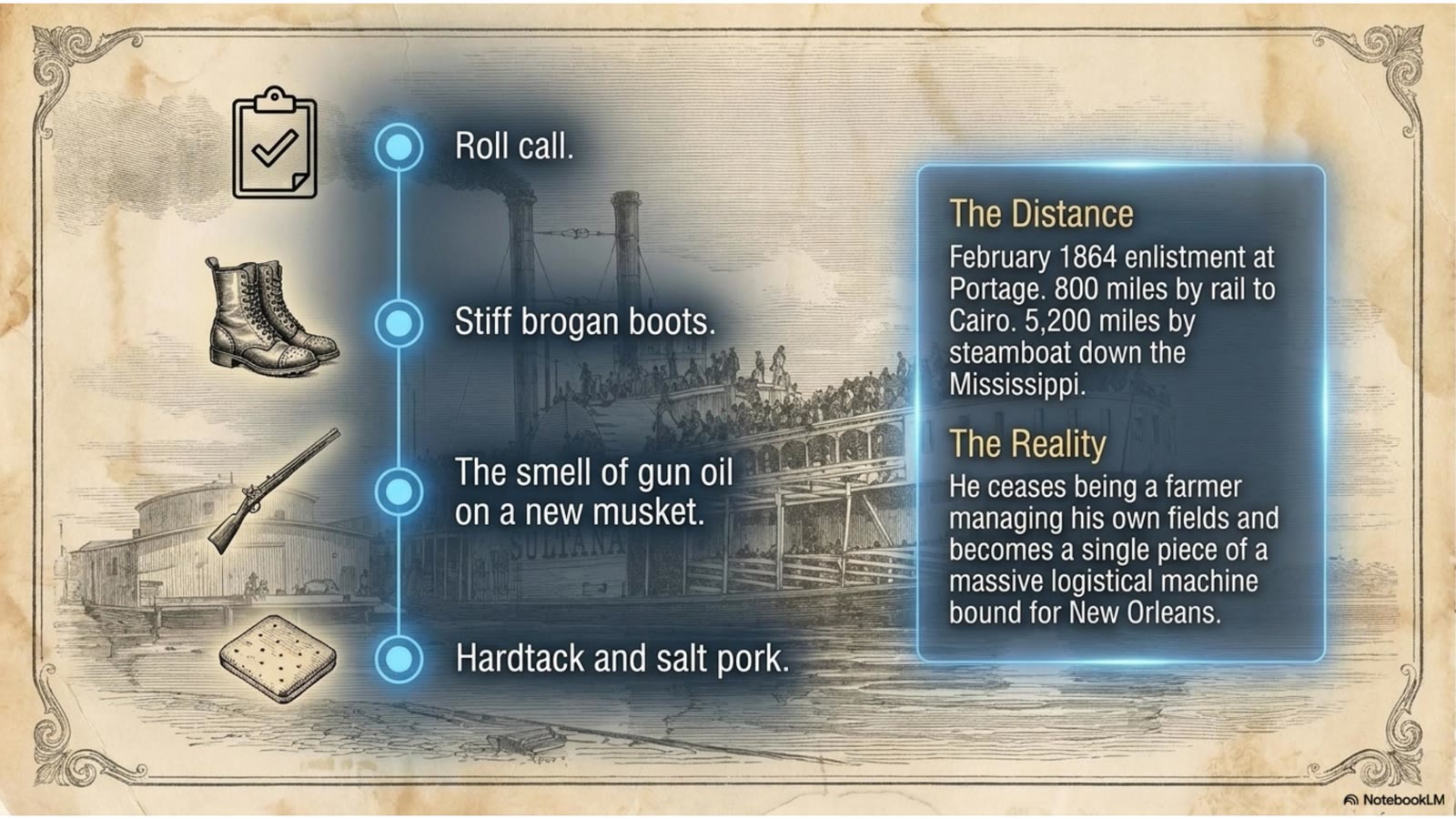
- Enlisted Portage, Wisconsin, February 1864
- 23rd Wisconsin Volunteer Infantry
- Camp Randall Madison training
- Transition to soldier life
-
▼Military Journey South
- Rail transport through Chicago
- River hinge at Cairo, Illinois
- Steamboat Sultana down the Mississippi
- Camp of Distribution, New Orleans
-
▼Red River Campaign · April 1864
- Letter home, April 25
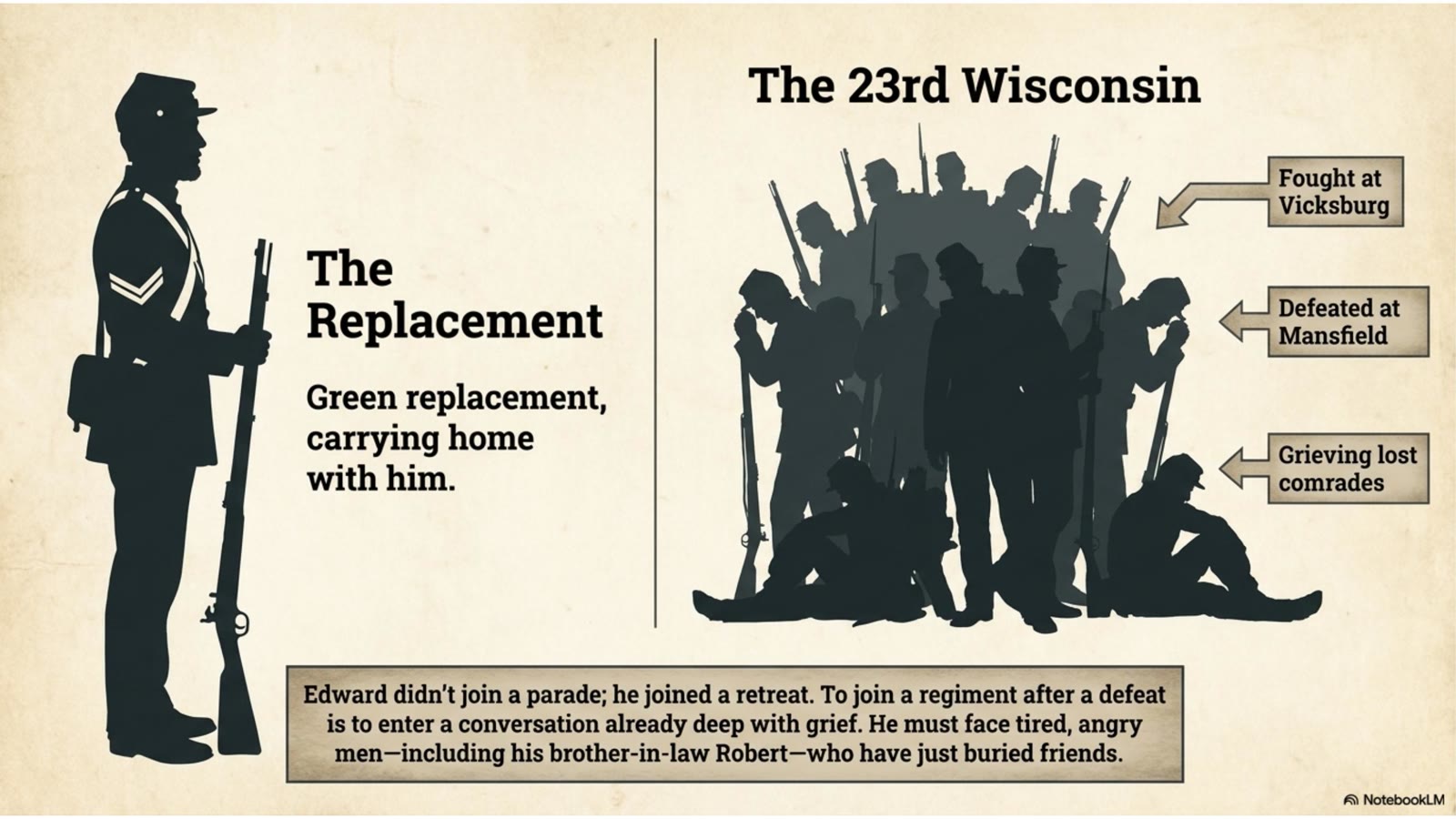
- Robert Hume (brother-in-law)
- Death of Peter La Flower
- General Banks's retreat
-
▼Bailey's Dam at Alexandria
- Union gunboats trapped by low water
- Lt. Col. Joseph Bailey's plan
- Logging and wing-dam construction
- Sinking coal barges
- Saving the fleet, May 1864
-
▼The Retreat to Safety
- Alexandria to Mississippi River
- Battle of Marksville prairie
- Bayou de Glaize engagement
- Fort Morganza steamboat bridge
- Reached Mississippi, May 21
-
▼Garrison Duty and Long Summer
- Stationed at Baton Rouge
- Nineteenth Army Corps transfer
- Louisiana heat and sickness
- Garrison life routine
-
▼Later Life and Legacy
- Rewrote war diary at age seventy
- Lived to age ninety
- Buried at Moundville, Wisconsin